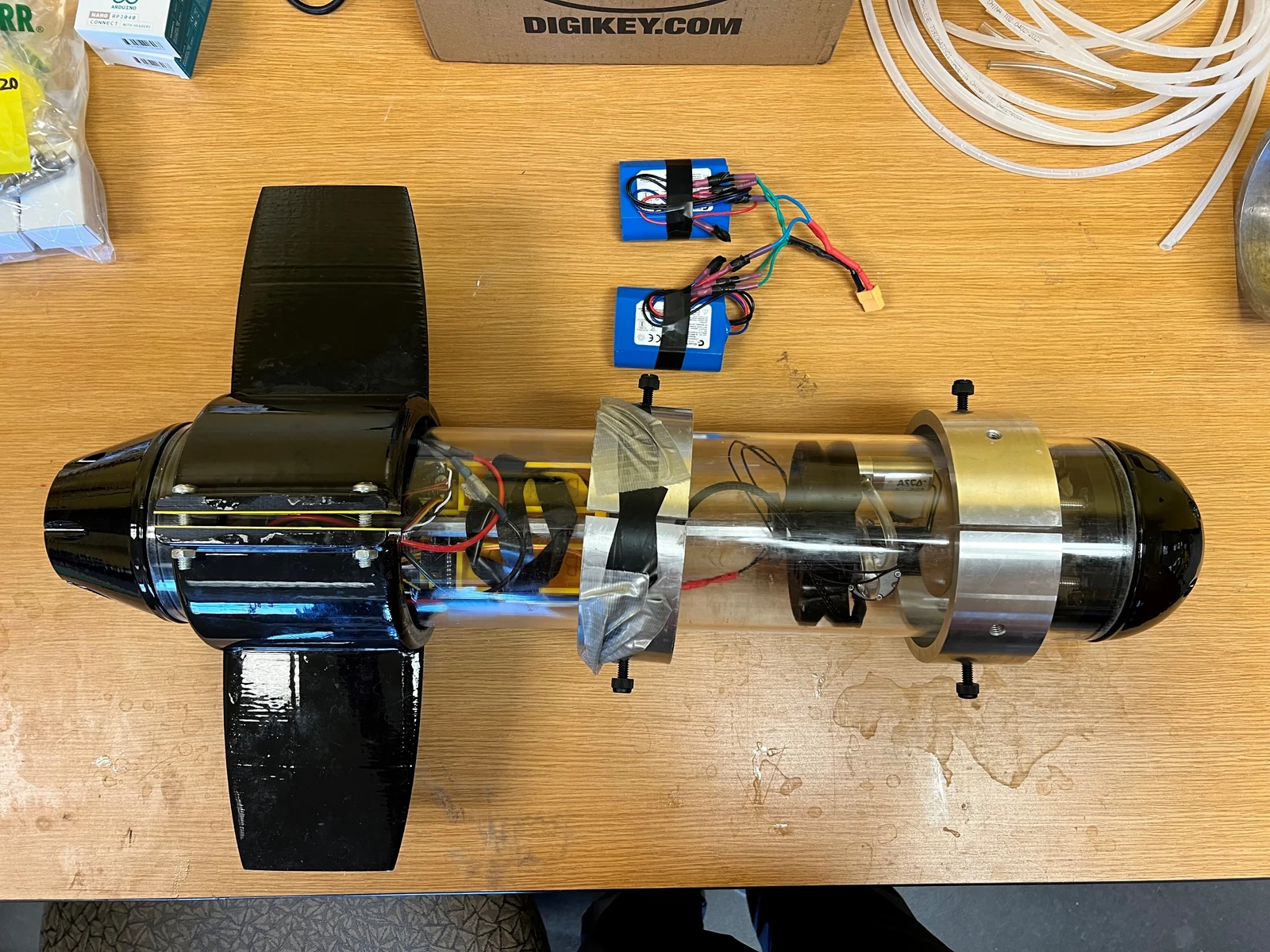
Replace a difficult mechanism with a shared moving rack
The inherited prototype had no surviving CAD for that iteration. I recreated a similar model, replaced a bulky rack-and-pinion pitch mechanism with a commercial micro-linear actuator, and used an aluminum hex shaft to connect translation and active roll. Moving the battery and other internal mass increased the useful center-of-mass shift while keeping the assembly accessible.
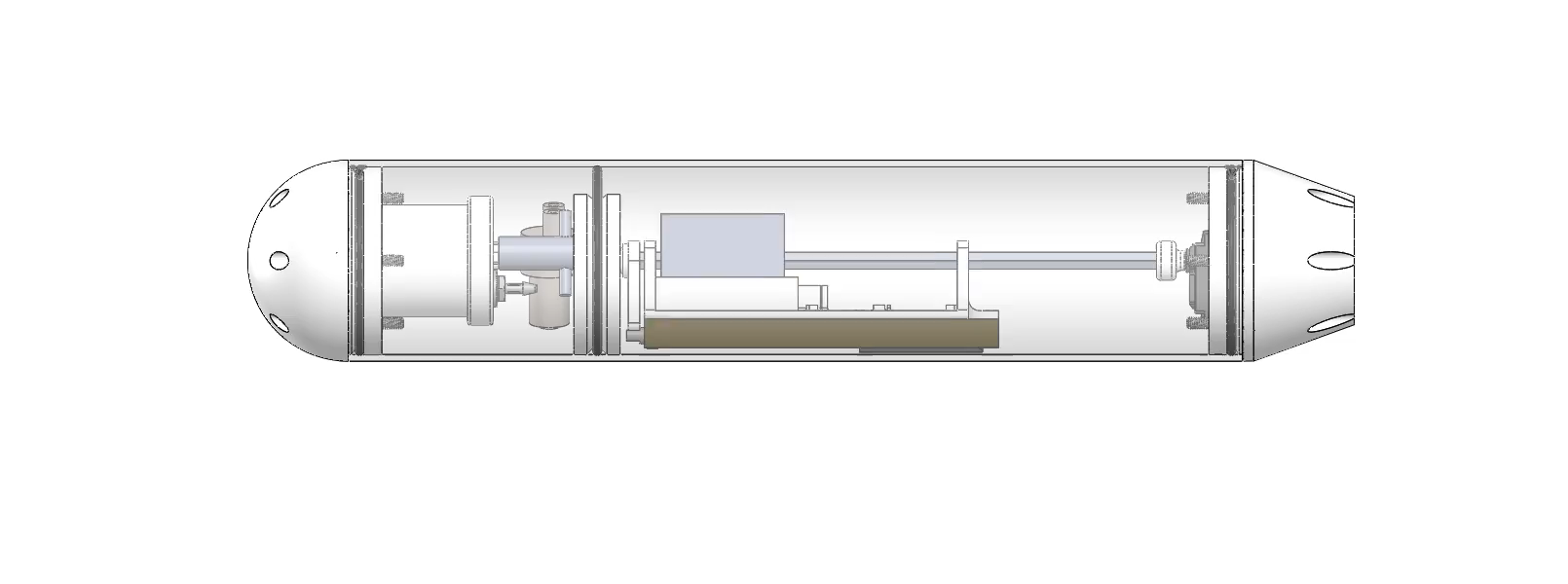
Fit buoyancy control into the hull
I enlarged the ballast tank, revised the pump, solenoid and tubing arrangement, and added a compression hard stop to protect the actuators during assembly. The historical tests showed why feedback and trim mattered: the pump could overfill the tank, and an early untrimmed whole-system test did not swim.
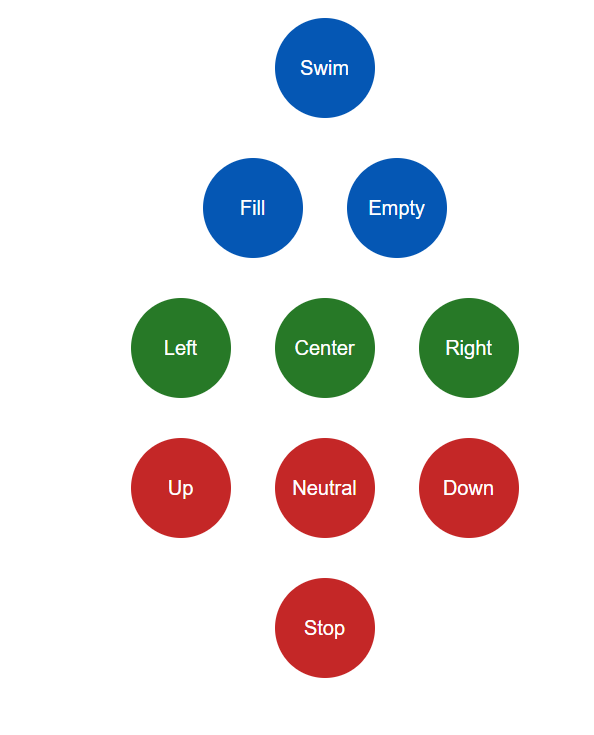
Connect the hardware to an external computer
I wrote C++ software that communicated with the microcontroller and created an HTML command interface for the linear actuator, roll servo and pump. The preserved interface image shows that hardware-integration work. Coordinated swimming software still required further development.
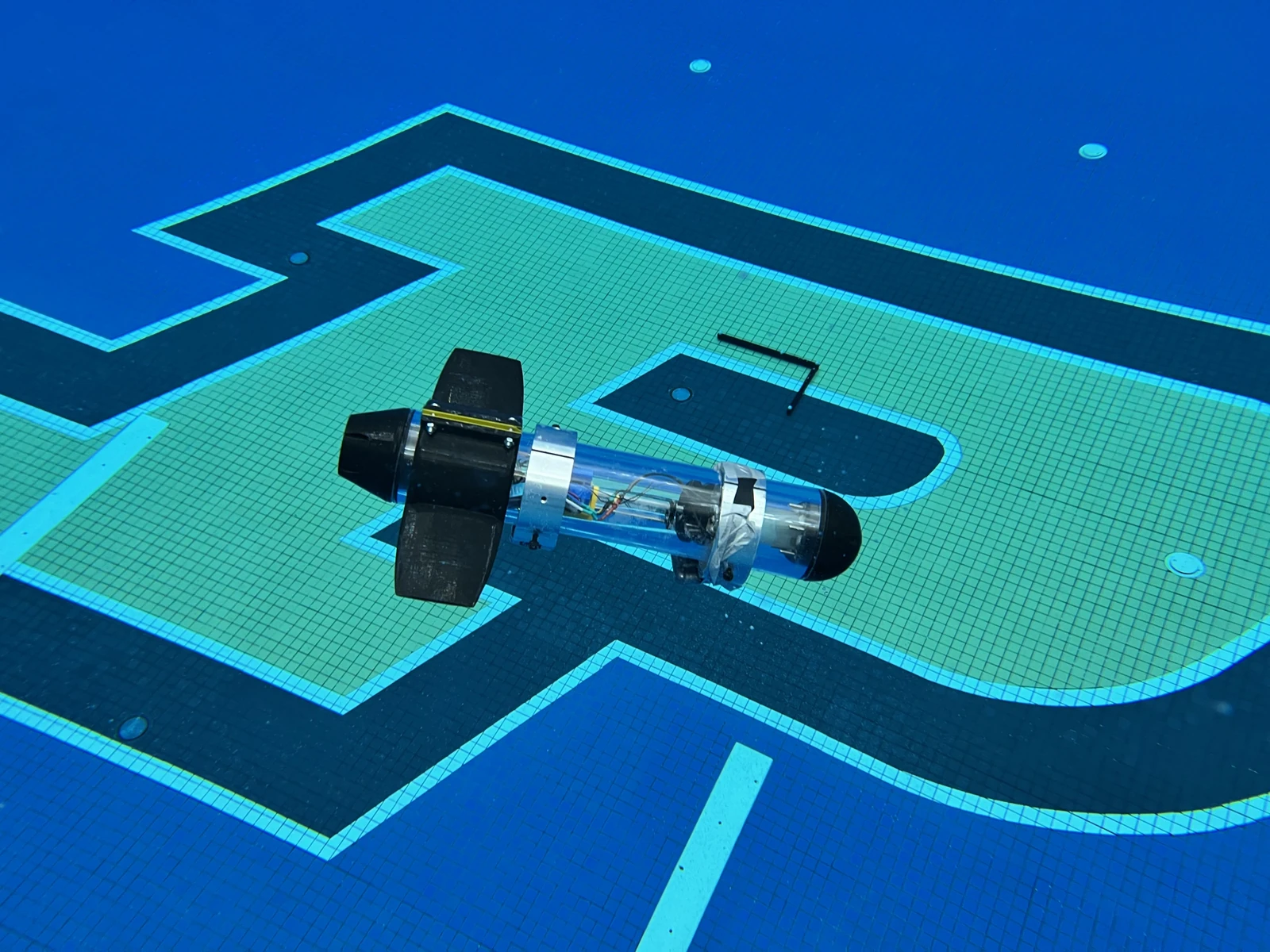
Separate the hardware result from the next engineering step
Later pool testing was reported to show the expected swimming pattern, with the assembled hardware ready for further software development. That result established a research platform; it did not establish an autonomous mission or a measured glide-performance envelope.
A later digital design closes the interfaces explicitly
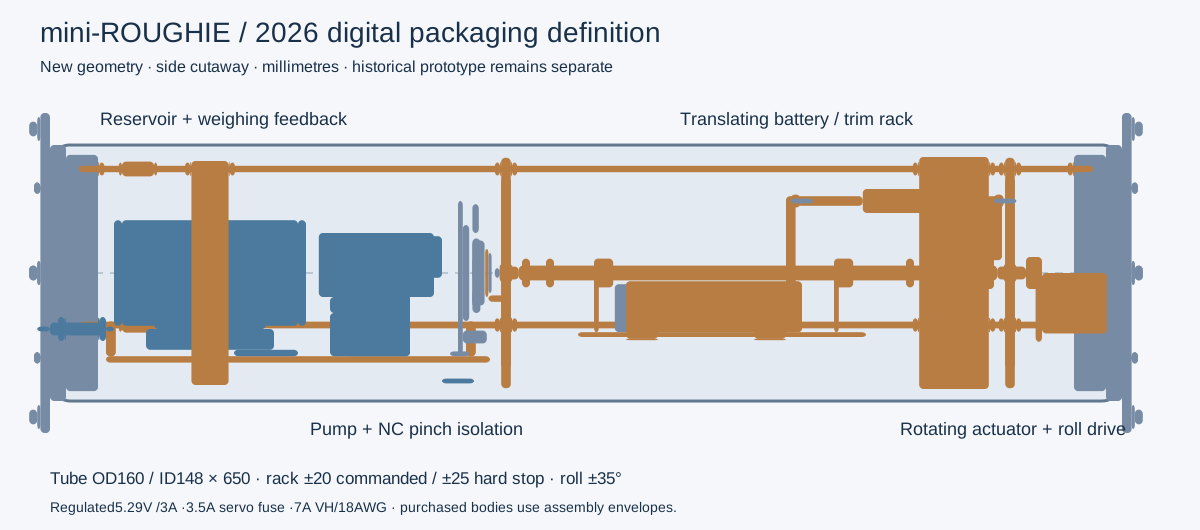
A separate 2026 engineering package defines the hull, plumbing, rack mechanism, power path and command state machine as one bounded shallow-pool design. Its new controller stops on stale commands, invalid feedback, overfill, leaks, low battery and stalled motion. Simulation checks exercised the command limits and fault behavior; the interface diagram below summarizes the packaging and connections. These are new digital results, with physical calibration and pressure testing still required.
2026 design interfaces
Project context
Camden Boston / Mahmoudian Lab, Purdue University, 2022–2023. The 2026 digital reconstruction is later work and has no new hardware validation.
Historical photographs, footage, and plots retain their original dates. Later digital reconstructions are identified separately; their numerical checks do not establish hardware performance.